
Our Mission, Vision, and Goals

Mission Statement. We are leaders in advancing education, advocacy, and research for those impacted by
autoimmune & autoinflammatory arthritis diseases through capturing and infusing peer-to-peer lived experience data into one-of-a-kind guidance, resources, and programs that improve the patient journey.
Patient-led approach: "We don't represent the patient voice, we are the patient voice." AiArthritis is led by people personally affected by the diseases we serve. Through peer-to-peer conversations and discussions, we listen to what matters, what is confusing, and what is missing. Patient lived experience leads our work: patients and care partners identify what matters first, then, when needed, we invite researchers, clinicians, organizations, and other stakeholders to our table as collaborators. This ensures our education, advocacy/public policy, and research efforts begin with the priorities of those most affected.
Global Network philosophy. We collaborate with other organizations, health professionals, and other groups as necessary to make sure the work we do creates the most impact. People affected by the diseases lead the work, then
we invite others to have a seat at our table to advise.
Who do we help?
Those Diagnosed
Those diagnosed with one of the 23 autoimmune and autoinflammatory arthritis diseases.
Their Support Network
Family and friends of those impacted by our conditions.
The Undiagnosed
Everyone is undiagnosed before they are diagnosed...and more often than not the journey is challenging.
Vision
We envision the stories of tomorrow to be those of early detection and diagnosis, individualized therapeutic intervention and access to them, improved quality of life, common remission, and a world that understands the depth of our diseases and the challenges associated with them.
Core Priorities & Goals
- Accelerate early detection, referrals, diagnosis, and access to therapeutic intervention
- Improve quality of life, communication, remission rates, and healthcare outcomes
- Expand patient collaboration and influence in education, advocacy, and research in order to improve outcomes and advance innovation
- Eliminate misconceptions about these diseases and the type of inflammatory arthritis associated with them (“Autoimmune Arthritis” Diseases and “Autoinflammatory Arthritis” Diseases, commonly known as AiArthritis Diseases)
How do we help?
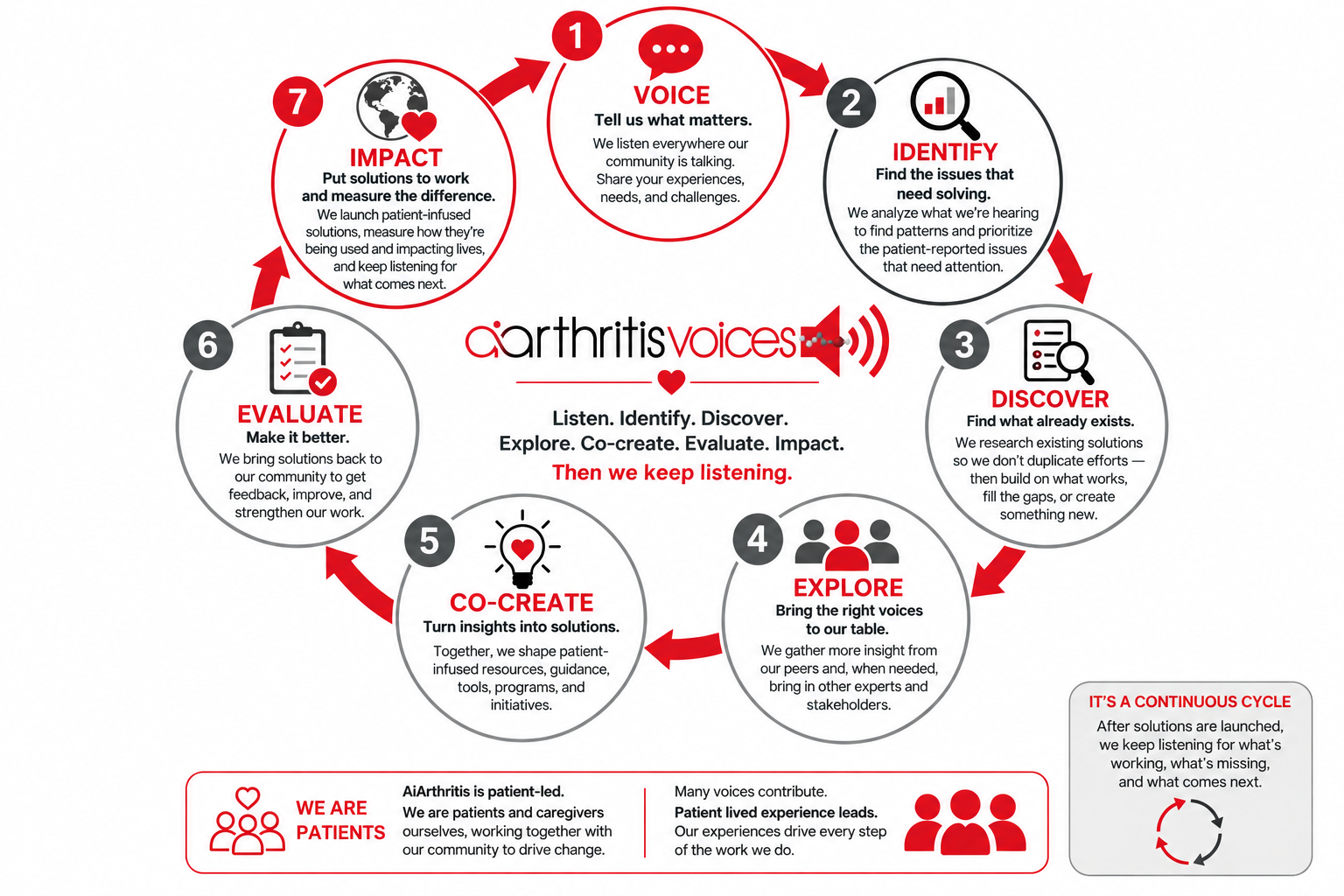
Everything we do starts by listening. Our seven-step, patient-led process moves lived experience toward meaningful action—identifying what matters, discovering what exists, bringing the right voices to our table, and working together toward solutions and impact. Then we keep listening.
Flexible, Flare-Free Environment
When our founders developed the working structure, they took into account that the patients working and volunteering for our organization would require extreme flexibility to accommodate disease activity and flares so they could work when they are at their very best.
This means that we are open 24 hours a day, 7 days a week to serve our people well and has resulted in heightened productivity and ability to reach across time zones with international collaboration and partnerships.
We have always worked through virtual officing so staff living with our conditions can save energy by not commuting and are in a comfortable environment in case they flare.

Fun Fact
Did you know this nonprofit started in 2011 after first being an awareness movement that showcased a bracelet with this bead pattern (now in our logo!)? Each bracelet came with a message that explained the meaning behind the pattern of beads in the design: "The three silver and black beads represent all people in a community working together for impact (red bead) to bring change (last gray bead)."
Leadership Team
From professional training in business, education, and
research to expertise in a variety of patient advocate roles, we are community leaders and teachers.
History
One misunderstood patient started an awareness movement, where she met others just like her. Together they realized the key to change lies within the patient voice.